Mirrorless or DSLR: Here's the Honest Answer for Every Type of Creator
Every few months, someone drops a comment in a creator forum asking the same question: Should I buy mirrorless or stick with a DSLR? And every time, the thread explodes into a hundred opinions, half of them outdated, a quarter of them sponsored, and the rest just confusing. So let's cut through the noise.
The truth? Both systems can produce stunning work. But depending on what you're making, who you're making it for, and how much you're willing to haul around, one is almost certainly a better fit for your workflow than the other. Let's get into it.
What's Actually Different Between the Two (in Plain English)
DSLRs use a mirror inside the camera body to bounce light up to an optical viewfinder. When you press the shutter, the mirror flips up and light hits the sensor. It's a mechanical system that's been refined over decades — reliable, intuitive, and battle-tested.
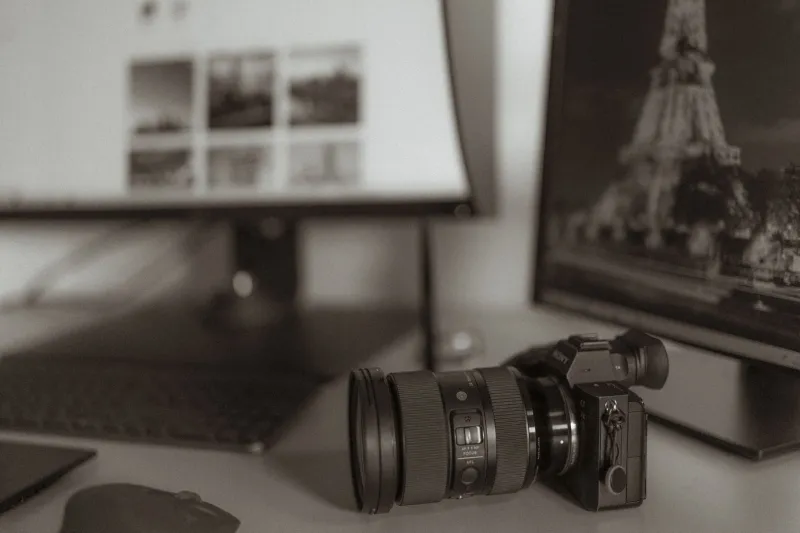
Mirrorless cameras ditch that mirror entirely. Light goes straight to the sensor all the time, which means the camera can be smaller, the autofocus system can be more sophisticated, and video capabilities tend to be more advanced right out of the box.
That's the simplified version. But the real differences show up when you actually try to use these cameras in the field.
The Case for Mirrorless in 2024
Here's the blunt take: mirrorless is where the industry is going. Canon, Nikon, and Sony have all but stopped developing new DSLR bodies. Sony abandoned DSLRs entirely years ago. Canon's EOS R line and Nikon's Z series are where the R&D money is flowing, full stop.
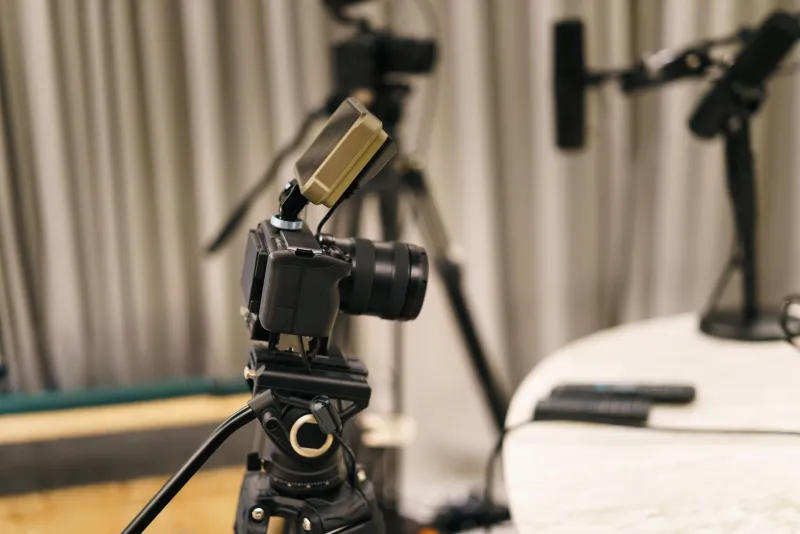
For YouTubers and video-first creators, mirrorless is a serious upgrade. Most modern mirrorless bodies offer 4K recording, in-body image stabilization (IBIS), and eye-tracking autofocus that keeps your face sharp even when you're moving around your studio like a caffeinated golden retriever. If you're filming talking-head content, vlogs, or anything where you're both behind and in front of the camera, that matters enormously.
The Sony ZV-E10 II, for example, gives you a capable APS-C sensor in a compact body that won't break the bank — perfect for creators who want a step up from their phone without investing in a full-frame rig right away.
For Instagram photographers and lifestyle content creators, the mirrorless advantage is portability. A compact mirrorless body with a pancake lens fits in a jacket pocket. That changes what you shoot and when you shoot it, because the best camera is always the one you actually have with you.
The Case for Keeping (or Starting With) a DSLR
DSLRs aren't dead — they're just mature. And maturity has its perks.
First, the lens ecosystem. Canon's EF mount and Nikon's F mount have decades of glass behind them. That means you can find high-quality used lenses at a fraction of what new mirrorless glass costs. If you're a documentary filmmaker or a photojournalist on a tight budget, buying into a used DSLR system can get you access to professional-grade glass for significantly less money upfront.
Second, battery life. DSLRs routinely get 800–1,000+ shots per charge. Most mirrorless bodies hover around 300–500. If you're shooting all-day events — weddings, conferences, sports — that difference adds up fast and means more time swapping batteries instead of shooting.
Third, ergonomics. For photographers with larger hands or those used to traditional camera handling, DSLRs feel natural in a way that some compact mirrorless bodies simply don't. The optical viewfinder also performs better in very bright outdoor conditions than electronic viewfinders, which can lag or wash out in direct sunlight.
Documentarians in particular might find the DSLR's durability and long battery life genuinely useful when they're in the field without easy access to power outlets.
Breaking It Down by Creator Archetype
The YouTube Creator
Go mirrorless. The autofocus, video features, and compact form factor make it the clear winner. Look at the Sony ZV-E1, Canon EOS R50, or Nikon Z30 depending on your budget.
The Instagram Influencer / Lifestyle Photographer
Go mirrorless. Portability and fast, accurate autofocus for street-style and candid shooting are your priorities. A Sony a6700 or Fujifilm X-S20 hits the sweet spot of image quality and packability.
The Documentarian or Field Journalist
Consider DSLR — or a prosumer mirrorless. If budget is tight, a used Canon 5D Mark III or Nikon D750 with quality glass is hard to beat for the money. If budget allows, the Sony FX30 or Canon EOS R7 bridges the gap beautifully.
The Photography Hobbyist Leveling Up
Either works, but lean mirrorless. You'll grow into the system longer-term, and the used mirrorless market is starting to mature with great deals on previous-generation bodies.
What About the Cost of Ownership?
This is where people get tripped up. The camera body is just the beginning.
Native mirrorless lenses, especially for full-frame systems, are expensive. A Sony G Master lens or Canon RF prime can run $1,500–$3,000 or more. That's a real consideration. However, adapters let you use older DSLR glass on many mirrorless bodies, which softens the financial blow considerably — though you may lose some autofocus performance depending on the lens.
DSLR glass, as mentioned, is plentiful and cheap on the used market. Platforms like eBay, KEH, and MPB are loaded with Canon EF and Nikon F lenses at prices that would make mirrorless shooters jealous.
Over a five-year horizon, though, mirrorless wins the value argument simply because manufacturers are investing in those platforms. Firmware updates, new accessories, and ecosystem support will be richer on the mirrorless side going forward.
The Bottom Line
If you're starting fresh in 2024 and have no existing gear investment, buy mirrorless. The technology is better suited to the demands of modern content creation, the systems are more future-proof, and the gap in cost has narrowed significantly.
If you already own a solid DSLR kit — good glass, reliable bodies, a workflow you love — don't feel pressured to switch. Your gear can still produce professional-level work, and the savings from staying put can go toward lighting, audio, or other upgrades that might actually move the needle more.
The best camera system is the one that gets out of your way and lets you focus on the story. Whatever that looks like for you, we've got the gear to back it up.