That Gimbal Won't Fix What Your ND Filter Can Handle for $30
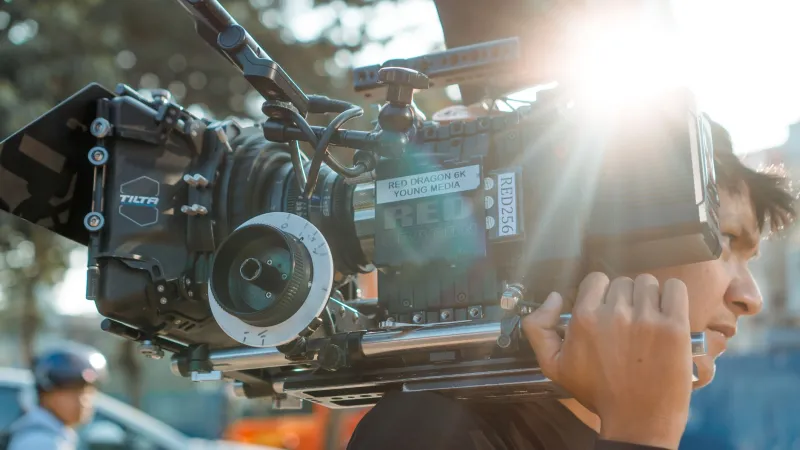
Here's a scenario that plays out constantly in creator forums and subreddits: someone posts their footage, complains it looks "off" or "shaky" or "too digital," and immediately asks for gimbal recommendations. The thread fills up with $400–$600 suggestions. Nobody stops to ask the obvious question — is the problem actually stabilization?
Spoiler: most of the time, it isn't.
The real culprit is usually exposure. And the fix costs about thirty bucks.
What You're Actually Seeing (And Misreading)
When footage looks wrong, creators tend to blame the most visible, mechanical thing they can point to — camera movement. But your eyes are processing a lot of information at once, and it's easy to confuse different problems.
That "jittery" look? Could be your shutter speed is too high. When you shoot at 1/1000s in daylight, each frame is frozen so crisply that even the smallest natural movement between frames creates a staccato, almost strobing effect during playback. Your brain reads that as instability.
That "floaty" or "overexposed" look? Probably your aperture is wide open because you're trying to get that shallow depth of field, but you're outside in full sun and your camera is desperately compensating.
A gimbal solves neither of these things. It physically cannot. It only addresses actual optical axis movement — the kind caused by your hands, your footsteps, your breathing. If the image itself is being rendered incorrectly because of exposure settings, no amount of mechanical stabilization changes that.
The 180-Degree Rule Is the Missing Piece
Filmmakers have followed the 180-degree shutter rule for decades. The idea is simple: your shutter speed should be roughly double your frame rate. Shooting at 24fps? Your shutter speed should sit around 1/50s. At 30fps, aim for 1/60s.
This creates the natural motion blur your eyes expect when things move across the frame. It's what makes cinema look like cinema rather than a local news broadcast or a video game cutscene.
The problem is that 1/50s or 1/60s in bright outdoor conditions — a beach, a rooftop, a sun-soaked trail — lets in way too much light. Your camera will either blow out the highlights completely or automatically crank up the shutter speed to compensate, breaking the 180-degree rule and killing your motion rendering in the process.
This is exactly where an ND filter steps in.
What an ND Filter Actually Does
A neutral density filter is essentially sunglasses for your lens. It cuts the amount of light entering the camera without affecting color — when you buy a quality one, anyway. Slap a 3-stop ND on your lens and you've just cut the incoming light by a factor of eight, which lets you shoot at that ideal 1/50s shutter speed even in harsh midday sun.
The result? Motion renders naturally. Your exposure is controlled. Your footage stops looking clinical and starts looking cinematic — all without touching your stabilization setup.
Variable ND filters, which let you dial in different levels of light reduction by rotating the outer ring, run anywhere from $25 to $80 for most common lens sizes. Fixed ND filters (3-stop, 6-stop, 10-stop) are even cheaper and often optically cleaner at the entry level. Either way, you're looking at a fraction of what a gimbal costs.
Real Scenarios Where This Plays Out
The outdoor vlogger: You're walking and talking on a trail, shooting handheld at 30fps. Your footage looks jittery and harsh. Before you assume it's your walk causing shake, check your shutter speed. If it's sitting at 1/500s or higher because of bright light, that's your problem. Drop an ND filter in, bring your shutter back to 1/60s, and watch the footage soften into something that actually feels natural to watch.
The real estate or travel shooter: You're filming a beautiful property or landscape and the footage looks weirdly "video-ish" even though you're on a tripod. A tripod means zero shake — so why does it still look off? Again, shutter speed. The 180-degree rule applies whether you're handheld or locked down.
The run-and-gun content creator: You shoot everything fast and loose, often in mixed lighting. An ND filter with quick-release filter holders lets you pop different densities on and off as you move between shade and sun, keeping your exposure consistent without constantly diving into menus.
So When Do You Actually Need a Gimbal?
Gimbals are legitimately great tools. Nobody's saying don't ever buy one. But they solve a specific problem: physical camera movement that you want to smooth out during motion shots — tracking someone walking, following action, doing a reveal shot around a corner.
If you're primarily shooting static interviews, talking-head content, tripod-mounted b-roll, or even casual handheld where natural movement is acceptable (and often preferred), a gimbal isn't doing much for you. In-body image stabilization on modern cameras handles most casual handheld shooting already.
Buy the gimbal when you've nailed your exposure. When your footage looks right on a tripod, then start thinking about how to make it look right while you're moving through space.
The Actual Order of Operations
If you're trying to level up your footage quality, here's the honest priority list:
- Understand your frame rate and match your shutter speed accordingly. This alone transforms footage.
- Add an ND filter so you can maintain the right shutter speed in variable lighting.
- Nail your white balance and color profile so your image looks accurate before any grading.
- Use a tripod or monopod for anything that doesn't require movement.
- Then, if you still need smooth motion during movement, look at a gimbal.
Notice where the gimbal lands on that list. It's not step one. It's not even step two or three.
The Bottom Line
Creators get sold on gimbals because gimbals are exciting. They're mechanical, they look cool on a rig, and there's an entire ecosystem of influencer content built around them. ND filters are boring by comparison — they're just a piece of glass you screw onto your lens.
But boring gear that solves the right problem beats exciting gear that solves the wrong one every single time.
Before your next big equipment purchase, shoot some test footage, diagnose what's actually wrong, and ask yourself honestly: is this a stabilization issue or an exposure issue? Nine times out of ten, a $30 filter is the answer you were looking for.