Stop Paying a Premium for Lens Filters That Aren't Doing Anything Extra
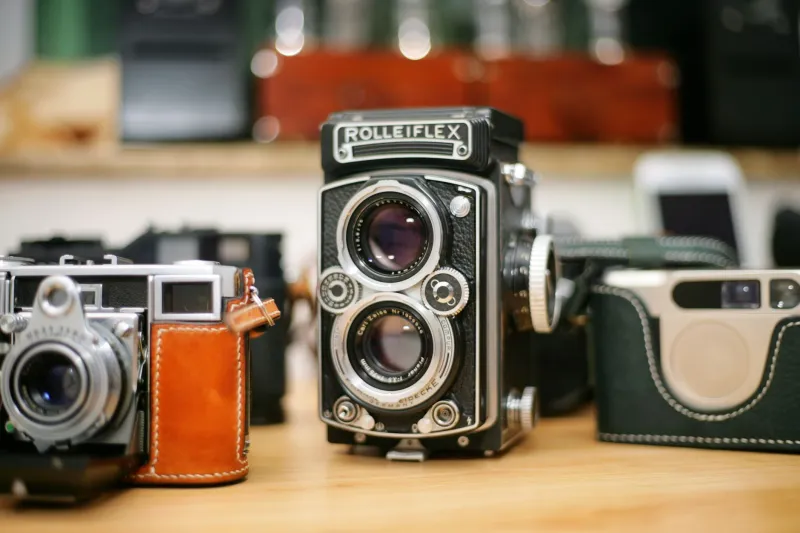
Walk into any camera store — or scroll through B&H for five minutes — and you'll find lens filters ranging from $15 to well over $200. Same size. Roughly the same job. Wildly different prices. And if you ask the sales rep why the $180 one is better than the $25 one, you'll get a pitch about multi-coating technology, optical clarity, and something vague about "color neutrality."
Some of that is real. Most of it is noise.
The filter market has quietly become one of the easiest ways for gear companies to extract money from creators who are already spending big on glass and bodies. And the frustrating part? A lot of those expensive filters are sitting on lenses doing absolutely nothing that a cheaper option couldn't do just as well.
Let's break down what's actually happening here.
The UV Filter Myth
UV filters were genuinely useful back in the film era. UV light would fog film emulsion, and a filter that blocked it made a real difference in your shots. Digital sensors? They already have built-in UV filtration. Your camera is handling that before light ever hits the sensor.
So why do UV filters still sell like crazy? Because the industry rebranded them as "protective filters" — a clear piece of glass you keep on your lens at all times to guard against scratches, dust, and the occasional accidental bump.
Here's the thing: that's a legitimate use case. A filter sitting on the front of your lens can save you from a scratch that would cost $200+ to repair. The problem is that protection has nothing to do with price. A $20 UV filter from a reputable brand blocks physical contact just as effectively as a $150 one. Glass is glass. The filter either stops a scratch or it doesn't — and the price tag isn't what determines that.
Where the expensive filters do edge ahead is in optical quality. A cheap, poorly coated filter can introduce flare, slightly degrade sharpness, or create a faint color cast. But here's the real talk: for most content creators shooting YouTube videos, social content, or event coverage, that difference is invisible in the final product. It's a difference that exists in lab tests and pixel-peeping forums — not in your actual deliverables.
If you're a commercial photographer delivering to clients who will scrutinize every pixel, spend up. If you're building a camera kit for content creation, a mid-range filter from a brand like Tiffen or Hoya in the $20–$40 range is completely sufficient.
Polarizers: The One Filter That Actually Earns Its Price
Here's where the conversation shifts. Polarizing filters — specifically circular polarizers (CPL) — are one of the few filters that genuinely cannot be replicated in post. They cut glare off water and glass, deepen the blue in skies, and reduce reflections in a way that no amount of Lightroom or Premiere color work can reproduce.
If you shoot outdoors, on water, or in environments with a lot of reflective surfaces, a CPL is a worthwhile investment. And in this case, spending a little more actually makes sense — not because of marketing, but because a cheap polarizer can introduce noticeable color shifts and reduce image quality in ways that matter.
A mid-tier CPL in the $40–$80 range hits a solid sweet spot. You're getting real optical quality without paying for a brand name engraved on the ring. Brands like B+W, Tiffen, and Hoya all have solid options in this range. You don't need to go to $150+ unless you're shooting with very high-end glass and you're doing work where optical perfection is genuinely on the line.
ND Filters: Variable vs. Fixed, and Why Cheap Variable NDs Will Ruin Your Day
Neutral density filters are genuinely useful for video creators. They let you control exposure without changing your aperture, which is critical when you're trying to maintain a specific depth of field or stick to the 180-degree shutter rule for cinematic motion blur. In bright outdoor conditions, an ND filter can be the difference between usable footage and blown-out garbage.
Here's where budget decisions get more nuanced. Fixed ND filters — where you're buying a filter that reduces light by a specific number of stops — are generally fine at lower price points. A 3-stop or 6-stop fixed ND from a reputable brand doesn't need to cost $100+.
Variable ND filters are a different story. These are filters with two polarizing elements that you rotate to dial in the amount of light reduction. They're convenient — one filter instead of a whole set — but cheap variable NDs have a well-documented problem: the "X pattern" or cross-polarization effect. When you push them too far, you get a dark X-shaped artifact across your frame that's impossible to remove in post.
This is one area where spending more is genuinely justified. A quality variable ND in the $80–$120 range will handle a much wider rotation range without that artifact. A $25 variable ND will fight you every time you try to use it in bright conditions. This isn't marketing spin — it's physics.
The Kit Mentality That Drains Your Budget
One of the sneakiest moves in the filter market is the kit sale. You'll see "complete filter kits" bundled with UV, CPL, ND4, ND8, ND16, and sometimes a "warming filter" or "star filter" thrown in for good measure. They're often priced to feel like a deal.
Most creators end up using two of those filters regularly and never touching the rest. The warming filter adjusts color temperature — something you can do in post in thirty seconds. The star filter creates a starburst effect that looks dated and gimmicky in most modern content. You're paying for a drawer full of filters you'll use once, if ever.
Buy what you actually need for the shooting you actually do. If you're primarily a studio or indoor creator, you might not need any filters at all. If you shoot outdoors frequently, a protective UV, a solid CPL, and a variable ND cover the vast majority of real-world scenarios.
What the Budget Should Actually Look Like
Let's be direct about numbers. For most content creators in the US market:
- Protective UV filter: $20–$40 from Tiffen or Hoya. Done.
- Circular polarizer: $40–$80 depending on lens size. Worth the mid-tier spend.
- Variable ND: $80–$120 for a quality option that won't give you artifacts. Don't go cheap here.
- Fixed ND set (3-stop, 6-stop): $30–$60 total for the pair if you prefer fixed over variable.
That's a complete, functional filter kit for $170–$280 that covers every real shooting scenario you'll encounter. Compare that to buying a single "premium" UV filter for $150 and calling it a day — and you've got a fuller kit for roughly the same money.
The Bottom Line
Filters are real tools, but the pricing tiers in this market are not always tied to real-world performance differences. Know what each filter actually does, understand where optical quality genuinely matters versus where it's theoretical, and buy accordingly.
A $200 protective UV filter is not making your content better. A quality CPL and a decent variable ND absolutely will — and you don't need to spend a fortune to get there.