Autofocus Is Lying to You — Why Manual Focus Makes Better Videos

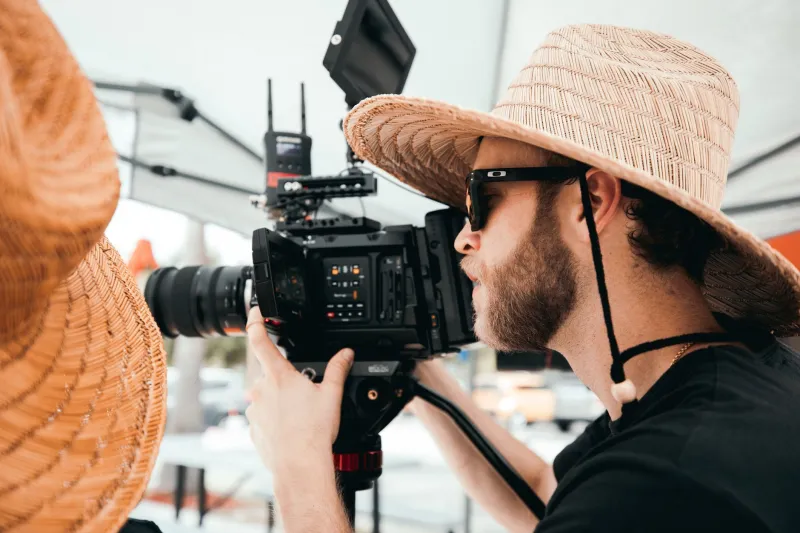
Photo: videographer adjusting manual focus ring on camera lens during film shoot, via exputer.com
Modern autofocus is genuinely impressive. Eye-tracking, subject recognition, face detection — today's mirrorless cameras can lock onto a subject faster than you can blink. So why does so much creator content still feel weirdly mechanical? Why does the footage look technically sharp but somehow... lifeless?
Here's the uncomfortable truth: your camera's AF system is optimizing for accuracy, not storytelling. And those two things are not the same.
The Problem With Letting the Camera Decide
Autofocus is reactive. It responds to what's in the frame, prioritizes whatever it's been trained to recognize, and makes split-second decisions based on contrast and algorithms. Most of the time, that works fine. But "fine" and "intentional" are very different things.
Think about a scene where you want the focus to shift from a person in the foreground to a detail in the background — a classic rack focus. Your AF system doesn't know that's what you want. It'll fight you, hunting between subjects, or just confidently lock onto the wrong thing entirely. That smooth, deliberate pull of focus that communicates something emotionally? You can't automate your way into that.
And that's before we even talk about the scenarios where autofocus flat-out fails.
When Autofocus Actually Breaks Down
Low light situations are the first place AF starts to struggle. In dimly lit environments — a candlelit dinner, a moody indoor interview, a nighttime outdoor shoot — contrast drops and your camera's focus system starts hunting. You'll see that tell-tale lens breathing, that micro-hesitation where the image briefly goes soft before snapping back. It's subtle, but viewers feel it even if they can't name it.
Fast, unpredictable movement is another killer. Sports, concerts, street photography translated to video — anything where your subject is changing direction quickly can trip up even high-end AF systems. The camera is always a fraction of a second behind, predicting where your subject will be. Manual focus, once you're dialed in, is you tracking the subject. That's a fundamentally different relationship with the image.
Glass-heavy or obstructed shots are where AF really embarrasses itself. Shooting through a window, a chain-link fence, foliage, or any kind of foreground element? Your camera will almost certainly grab onto the wrong thing. It's not being dumb — it's doing exactly what it was designed to do. It just doesn't know what you mean to focus on.
The Case for Taking Back Control
Switching to manual focus feels intimidating at first, especially if you've been shooting AF for years. But here's what changes when you make the shift: every sharp frame becomes a deliberate choice. You're not hoping the camera understood your intent — you are the intent.
For narrative content, interviews, short films, or any kind of scripted work, manual focus also gives you repeatability. You can mark your focus distances, rehearse your pulls, and execute the same move consistently across multiple takes. AF can't promise you that.
There's also something that happens to your overall awareness as a shooter when you go manual. You start thinking more carefully about depth of field, about where you're placing subjects in the frame, about how focus itself can carry emotional weight. It makes you a more deliberate filmmaker, full stop.
Practical Techniques Depending on Your Setup
If you're shooting mirrorless: Most modern mirrorless bodies have excellent focus peaking — a feature that highlights the edges of in-focus areas with a color overlay. Turn it on, set it to a color that stands out against your typical backgrounds (red or yellow usually work well), and use it as your guide. Pair that with your camera's magnification assist, which lets you zoom into the frame on your monitor while you're pulling focus.
If you're on a DSLR: Live View is your friend. Shooting through the viewfinder makes manual focus harder to judge, but flipping to Live View and using the zoom-in function gives you a much clearer read on sharpness. It's slower, but for tripod-based work it's totally manageable.
If you're using a cinema lens or follow focus rig: You're already set up for manual work. Hard stops, smooth gearing, and focus markings are built into the workflow. Learn your distances, mark your tape on the lens barrel, and rehearse your pulls before you roll.
For run-and-gun or solo shooting: This is where manual focus is genuinely harder, and it's worth being honest about that. If you're chasing unpredictable subjects with no support crew, a well-tuned AF system is probably the right call most of the time. But even here, switching to manual for specific setups — a locked-off interview, a product shot, a carefully framed hero moment — pays off.
The Learning Curve Is Shorter Than You Think
Most creators assume manual focus requires years of practice to be usable. It doesn't. The basics — using focus peaking, zooming in to check sharpness, understanding your lens's minimum focus distance — can be picked up in an afternoon. The refinements, like smooth rack focus pulls and judging focus by feel, take longer. But you don't need those to start benefiting.
Start simple: pick one static shot per session and nail the focus manually. Then try a slow rack between two subjects. Build from there. Within a few weeks, you'll be reaching for the MF switch more often than you expect.
Gear That Makes Manual Focus Easier
A few things make the transition significantly less painful. A decent external monitor with focus peaking is the biggest upgrade — the peaking on most camera LCD screens is functional but limited, and a larger display makes a real difference. A follow focus system, even an inexpensive one, gives you better control over your pulls and reduces the chance of accidentally bumping the focus ring mid-shot. And if you're shooting with adapted lenses, check that your adapter supports aperture and focus communication — some cheaper adapters cut corners there.
None of this has to be expensive. You can get meaningful results with a $150 external monitor and a basic follow focus cage attachment. The gear is a tool. The skill is the point.
Stop Letting the Algorithm Tell Your Story
Autofocus is a convenience, and convenience is genuinely valuable. Nobody's saying throw it out entirely. But if your content has felt a little flat lately, a little too clean and a little too passive, it might be worth asking whether you've been outsourcing too much creative control to a piece of software.
Manual focus puts the storytelling decisions back in your hands — where they belong.