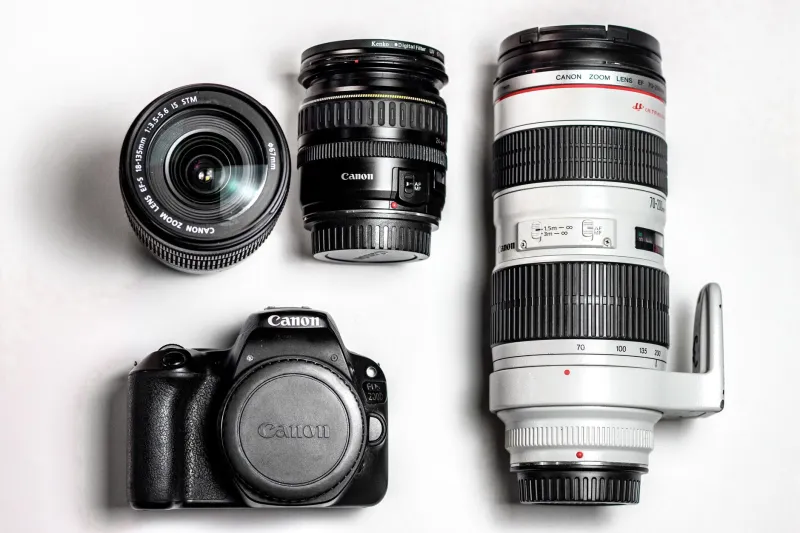
Your Second Lens Will Do More for Your Content Than Your First Ever Did
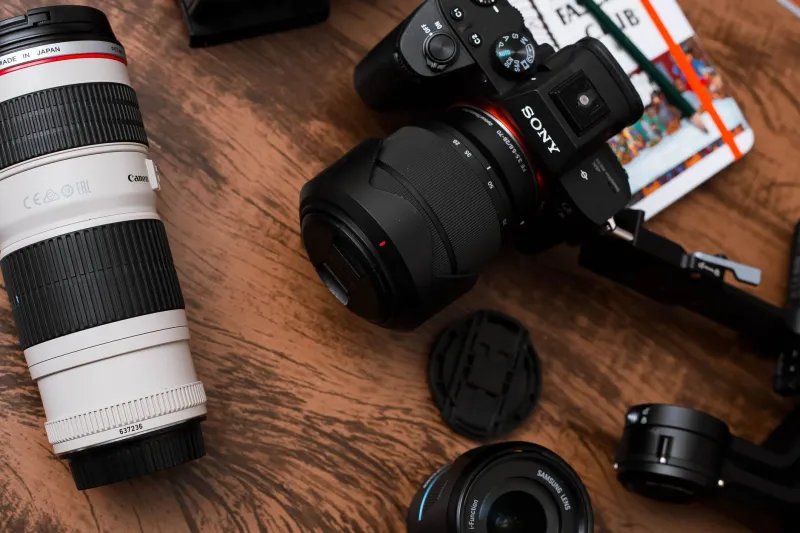
Here's something nobody tells you when you're first building out your camera kit: your debut lens purchase is mostly about survival. You need something that works, covers a reasonable range, and doesn't make your footage look like it was shot through a porthole. That's it. The bar is low.
Your second lens? That's where things get interesting.
The second lens you add to your bag is the one that defines your visual identity, fills in the gaps your first lens leaves behind, and — if you pick strategically — gives you a two-lens setup that punches way above what either piece of glass could do alone. Let's talk about how to make that choice count.
Why the First Lens Is Almost Always a Kit Lens (And That's Fine)
If you bought your camera as a kit, you probably got an 18-55mm or a 24-70mm equivalent thrown in. These lenses are designed to be competent across the board — not exceptional at anything, but not embarrassing either. They're workhorses. They handle decent light, cover a solid zoom range, and get out of the way while you figure out your settings.
For beginners, that versatility is exactly what you need. You're still learning when to zoom in, when to go wide, and how focal length affects the look of your shot. A kit lens lets you experiment without committing.
But once you've got a few months of shooting under your belt, you start to notice the ceiling. Low-light shots get noisy. Background separation is flat. Close-up product shots feel lifeless. That's not a skill problem — that's a glass problem. And it's exactly the gap your second lens is built to fill.
The Pairing That Changes Everything: Kit Zoom + Fast Prime
For the majority of content creators — YouTubers, reviewers, lifestyle vloggers — the single most impactful second lens you can buy is a fast prime. We're talking about a 35mm f/1.8 or a 50mm f/1.8, depending on your sensor size and the kind of content you make.
Here's why this combo works so well. Your kit zoom already handles flexibility. You can push it wide for establishing shots, pull it back for talking-head framing, and cover most of what you need in decent light. What it can't do is give you that soft, creamy background blur that makes content look polished and intentional. A fast prime at f/1.8 does that effortlessly.
Beyond aesthetics, the low-light capability changes your whole shooting schedule. Filming in your apartment at 9 PM? A fast prime gathers dramatically more light than a kit zoom at f/5.6. You get cleaner footage without cranking ISO into the noise zone.
For most US-based creators shooting in mixed indoor and outdoor environments — home studios, coffee shops, outdoor locations — this kit zoom and fast prime combo is the sweet spot of versatility and visual quality.
Product Reviewers and Tech Creators: Think Macro
If your content is built around close-up detail work — unboxing videos, tech reviews, beauty tutorials, food content — your second lens should be a macro or a short telephoto with close-focus capability.
A 90mm or 100mm macro lens does double duty here. It gives you stunning detail shots that make your product footage look genuinely professional, and it doubles as a solid portrait lens for talking-head segments thanks to that flattering compression at longer focal lengths. Brands like Tamron and Sigma both make highly capable macro options in the $400–$600 range that won't require you to sell a kidney.
Pairing a standard zoom with a macro telephoto is a particularly smart move for Amazon-style review content, where you need to show the full product in context and then get into fine details like ports, textures, and labels. One lens handles the wide story, the other handles the close-up proof.
Travel and Outdoor Creators: Go Wide
If your content lives outdoors — hiking, travel vlogs, adventure sports, real estate — and you're already working with a mid-range zoom, consider going wide for your second lens rather than longer.
A 10-20mm or 16-35mm wide-angle lens captures environmental context in a way that no standard zoom can replicate. It makes small spaces feel expansive, puts your subject inside the landscape rather than in front of it, and adds a visual drama to outdoor footage that resonates hard on platforms like YouTube and Instagram Reels.
Creators who do van life content, national park tours, or city exploration videos often find that a wide-angle second lens transforms their storytelling more than any other upgrade they could make. When your whole point is showing people a place, wide glass is how you actually transport them there.
The Mistake: Buying Parallel Instead of Complementary
The most common second-lens mistake is buying something that overlaps heavily with what you already have. If you've got an 18-55mm, picking up a 24-105mm as your second lens mostly just gives you more zoom range you probably don't need. You haven't filled a gap — you've just doubled up on your existing coverage with a slightly better version.
Think in terms of what your current lens cannot do. Can't shoot well in low light? Get a fast prime. Can't get close enough for detail work? Get a macro. Can't go wide enough for your environment? Get a wide-angle. Every lens you add should open a door that was previously closed, not repaint a wall that's already standing.
Budget Reality Check
Here's the good news: the second lens sweet spot doesn't have to cost a fortune. The 50mm f/1.8 from Canon, Nikon, or Sony typically runs under $150 new. Nifty fifty lenses have been a content creator staple for years for a reason — they're sharp, fast, and affordable in a way that makes the upgrade almost impossible to justify skipping.
If you want to spend a bit more and get a lens that'll grow with you, the 35mm f/1.8 options from first-party manufacturers and third-party brands like Sigma and Tamron land in the $200–$400 range and offer noticeably better build quality and autofocus performance.
For macro and wide-angle options, budget $350–$700 and you'll land solidly in capable territory without stepping into the professional-tier pricing that only makes sense when you're billing clients.
Build the Pair, Not the Perfect Lens
The fantasy of the one perfect lens that does everything is exactly that — a fantasy. Every focal length is a trade-off. Every aperture range involves compromise. The creators who consistently produce the best-looking content aren't the ones who found some mythical single lens — they're the ones who built smart, intentional pairings that cover each other's weaknesses.
Your first lens got you in the game. Your second lens is how you actually start playing it. Choose it with intention, fill the gap your current glass leaves open, and you'll be surprised how quickly your content starts looking like something you actually planned rather than something you just pointed a camera at.