Stop Blowing Your Budget on Camera Bodies — Buy Better Glass Instead
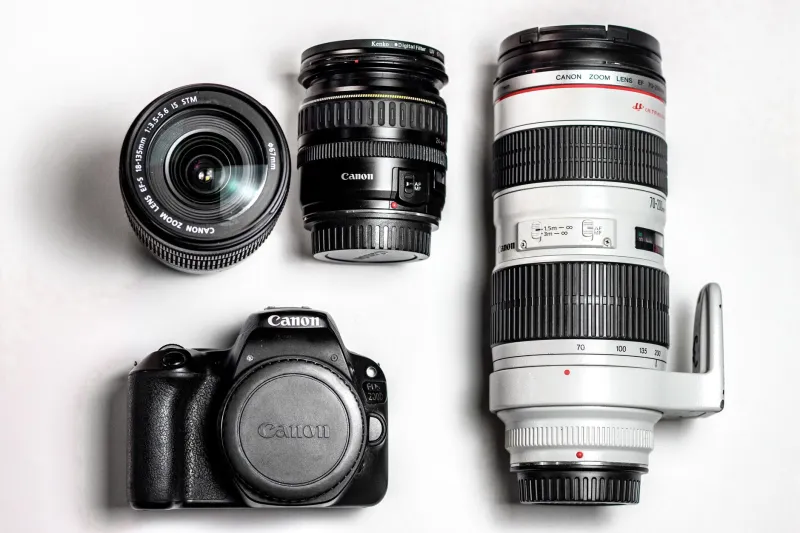
Every few months, a new camera body drops and the internet collectively loses its mind. Sony announces something. Canon fires back. Nikon quietly releases a firmware update that somehow makes everyone reconsider their whole setup. And somewhere in the middle of all that noise, a lot of creators — especially those still building out their kits — make the same expensive mistake: they dump their savings into the body and treat the lens like an afterthought.
That's backwards. And once you see the math, you can't unsee it.
What a Lens Actually Does to Your Image
Here's a quick reality check: your camera body is essentially a light-capturing computer. It processes data, handles autofocus algorithms, manages sensor noise, and outputs a file. Impressive stuff, sure. But the light that hits that sensor? That comes entirely from your lens.
Sharpness, bokeh, color rendering, contrast, chromatic aberration, distortion — all of that is determined before a single photon touches your sensor. A mediocre lens on a $3,000 body will still produce mediocre images. But a sharp, well-corrected prime lens on a $600 body? That's where things get interesting.
This isn't just theory. Cinematographers have known this forever. That's why rental houses charge more per day for a set of cinema primes than they do for the camera body itself.
The Cost-Per-Use Math Nobody Talks About
Let's get into the numbers, because this is where the lens argument really starts to land.
Say you buy a mid-range mirrorless body for $1,800. Two years later, a new generation drops with better autofocus, improved low-light performance, and a slightly upgraded sensor. You sell your body used and recoup maybe $900 — half its value, if you're lucky. That's a $900 loss over two years, or roughly $37.50 per month.
Now consider a quality 35mm f/1.8 prime lens at $500. You buy it today. That lens works on your current body. It works on your next body. It works on the body after that, assuming you stay in the same mount ecosystem. Five years from now, it's still producing sharp, beautiful images. You've used it on three camera upgrades. Your cost-per-use has dropped to almost nothing.
Quality glass doesn't depreciate the way bodies do. A well-maintained Canon L-series lens or a Sigma Art prime holds its value remarkably well on the used market. Some vintage glass — Leica, Zeiss, Voigtländer — actually appreciates. You're not going to see a Sony A7 III do that.
Real Creator Scenarios
Let's put this into a couple of realistic situations that might sound familiar.
The YouTube Vlogger: Marcus shoots talking-head content and occasional travel vlogs. He's been eyeing a camera upgrade for months, frustrated that his footage doesn't look as cinematic as creators he admires. Here's the thing — Marcus is shooting with a kit zoom lens at f/3.5-5.6. His footage looks flat not because of his body, but because he's never experienced what a fast 50mm prime at f/1.4 does to subject separation and depth of field. A $400 lens upgrade would transform his content more than a $1,200 body upgrade ever could.
The Wedding Videographer: Priya shoots weddings on weekends and corporate events during the week. She's considering upgrading her body for better low-light performance. But she's currently using a mid-tier zoom. If she invested in a fast f/2.8 professional zoom instead, she'd gain two full stops of light — equivalent to a massive jump in low-light capability — without touching her body at all. And that lens follows her into every future body upgrade.
How to Think About Your Mount Ecosystem
This is the key strategic piece that most first-time buyers completely miss. When you choose a camera system, you're not just choosing a body — you're choosing a glass ecosystem. That decision should drive everything.
Sony E-mount, Canon RF, Nikon Z, Fujifilm X — each system has a different library of native lenses, different third-party support from brands like Sigma, Tamron, and Viltrox, and different long-term viability for your investment. Micro Four Thirds from Olympus and Panasonic offers an incredible lens ecosystem at a smaller form factor.
The smartest thing you can do early on is research which mount has the glass you actually want — the focal lengths, the maximum apertures, the price points — and then choose your body based on that system. Not the other way around.
A Practical Framework for Budget Allocation
So how do you actually split your budget? Here's a rough framework that works well for most creators building from scratch or upgrading an existing setup:
If you're starting from zero with $1,500:
- Body: $600-700 (solid entry-to-mid-range mirrorless)
- Lens 1: $400-500 (a fast prime — 35mm or 50mm depending on your shooting style)
- Lens 2: $300-400 (a versatile zoom for flexibility)
If you're upgrading an existing setup with $1,000:
- Resist the body upgrade entirely if your current body is less than three years old
- Put $600-800 into a quality prime or professional zoom you don't already own
- Bank the rest for your next purchase
If you're a working creator reinvesting revenue:
- Prioritize completing your lens lineup before upgrading the body
- Buy once, buy right — the Sigma Art series and Tamron's SP line offer exceptional quality at non-insane prices
- Only upgrade the body when a specific technical limitation (autofocus, resolution, codec) is actively costing you work
The One Exception Worth Mentioning
There's a scenario where the body does deserve priority: when a genuine technological leap changes what's possible. The jump from DSLR to mirrorless was one of those moments. The introduction of internal RAW video recording was another. If a new body unlocks a capability that directly expands your creative or commercial range — not just marginally improves specs you already have — that's a legitimate reason to prioritize the upgrade.
But buying a new body because the autofocus is 12% faster or the sensor scores slightly better in a lab test? That's marketing doing its job, not your business case doing its job.
Glass Is the Long Game
Here's the bottom line: camera bodies are depreciating technology. Lenses are depreciating much more slowly — and the best ones barely depreciate at all. Every dollar you put into quality glass is a dollar that travels with you through multiple body upgrades, potentially across a decade of shooting.
The creators who build truly professional-looking content aren't the ones with the newest bodies. They're the ones who figured out early that the glass is where the magic actually lives — and they built their kits accordingly.
Next time you feel the itch to upgrade, open your lens bag first. Chances are, that's where your next investment belongs.