Your Viewers Are Leaving Because of Your Mic, Not Your Camera
Here's a scenario that plays out every single day across YouTube, TikTok, and Instagram: a creator uploads a beautifully shot video — crisp 4K footage, solid exposure, maybe even a cinematic color grade — and within a week, the analytics tell a brutal story. Viewers are dropping off at the 20-second mark. Comments say things like "hard to watch" or just say nothing at all, because they already closed the tab.
The camera wasn't the problem. The audio was.
This is one of the most consistent mistakes in the creator world right now, and it's not really about ignorance — it's about where people feel the impact of their gear. You can see a better camera. You can see better lighting. But audio problems are sneaky. They live in the background, quietly destroying the viewing experience while you're busy obsessing over your lens choice.
Why Bad Audio Hits Harder Than Bad Video
Human brains are wired to process audio and video together, but they're not weighted equally when something goes wrong. Research in film and media studies has repeatedly shown that viewers will tolerate lower video quality far more readily than they'll tolerate poor sound. Muddy dialogue, distracting background hum, hollow room echo — these things create a kind of cognitive friction that makes watching feel like work.
Think about the last time you watched a documentary with slightly soft visuals but clean, warm audio. You probably stayed. Now think about the last time you tried to watch something where the voice sounded like it was recorded inside a tin can. You probably bailed.
There are real-world creator stories that back this up hard. One mid-level travel vlogger with around 80K subscribers documented a test where they re-uploaded the same video twice — once with their original on-camera mic audio, and once with the audio rerecorded using a $90 lav mic. The version with clean audio had a 34% higher average view duration. Same visuals. Same edit. Just better sound.
The Most Common Mic Mistakes Creators Make
Before we get into gear recommendations, let's talk about the actual errors that tank audio quality. Most of them are fixable without spending a dime.
Relying on the built-in camera mic. This is the big one. Built-in mics on even high-end cameras are designed for ambient reference audio, not primary recording. They pick up everything — your camera's autofocus motor, your hands on the grip, the AC unit in the next room.
Recording in untreated spaces. A bare-walled apartment or a kitchen with hard floors creates a reverb problem that no amount of post-processing can fully fix. You don't need a professional studio — hanging a blanket behind your setup or recording in a closet full of clothes makes a measurable difference.
Mic placement that's too far from the source. The further a mic is from your mouth, the more room noise it picks up relative to your voice. Even a great mic sounds mediocre from six feet away.
Ignoring gain staging. Recording too hot causes clipping. Recording too low forces you to boost in post, which amplifies all the noise you were trying to avoid. Aim for peaks around -12dB to -6dB.
A Tiered Buying Guide for Every Creator Setup
Okay, let's get into the actual gear — broken down by budget and use case, because a solo indoor vlogger and a two-person interview show have completely different needs.
Under $75: The "No More Excuses" Tier
If you're shooting indoor content — talking head videos, product reviews, tutorials — a basic shotgun mic that mounts to your camera's hot shoe is a legitimate upgrade over your built-in mic. Options in this range from brands like Movo or the Rode VideoMicro give you directional pickup that rejects a lot of off-axis noise. Not perfect, but night-and-day compared to the stock mic.
For mobile creators shooting on phones or mirrorless cameras on the go, a wired lav mic in this price range (plugged directly into your phone or camera) gets your voice close to the source, which solves the distance problem immediately.
$75–$250: The Working Creator Sweet Spot
This is where the real upgrades live. The Rode VideoMic Pro+ and the DJI Mic 2 wireless system both fall in or near this range and represent massive jumps in audio quality. The DJI Mic 2 in particular has become a go-to for vloggers and run-and-gun shooters because it's a wireless lav system with a built-in backup recording on the transmitter — so even if your camera connection drops, you've got the audio saved.
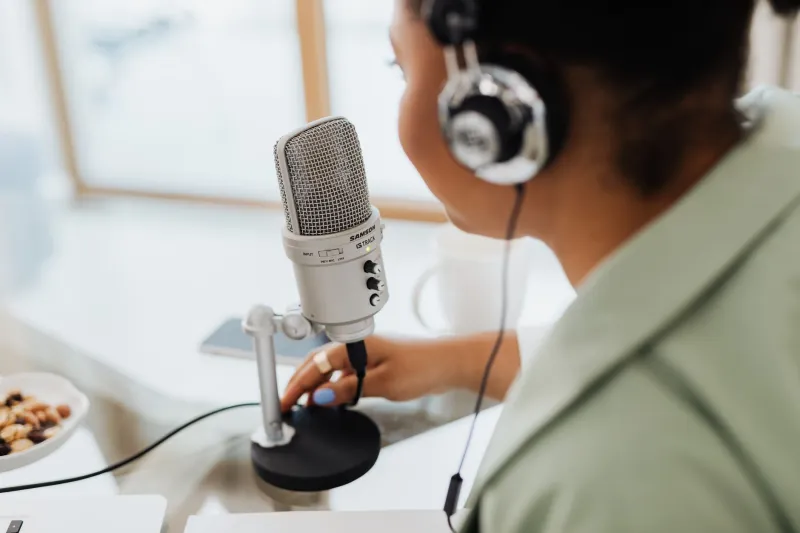
For indoor interviews and podcasts, a USB or XLR condenser mic on a boom arm (something like the Blue Yeti or the Audio-Technica AT2020) gives you that warm, full sound that makes content feel polished and intentional.
Outdoor vloggers should prioritize directional shotgun mics with good wind rejection. A furry windscreen (yes, the "dead cat" foam cover) is a $15–$30 add-on that prevents the wind-blasting problem that ruins so much outdoor content.
$250–$600: The Professional Output Tier
At this level, you're looking at dual-channel wireless systems like the Rode Wireless Pro, which handles two speakers simultaneously — essential for interview formats, podcast-style shoots, or any content with more than one on-camera voice. You're also getting into proper XLR audio interfaces (like the Focusrite Scarlett series) that give you precise control over gain, monitoring, and signal quality.
Event coverage creators should seriously consider a hybrid setup: a wireless lav on the speaker plus a directional shotgun on the camera as a backup track. If one fails or gets interference, you're covered.
The Cheap Fix That Transforms Your Audio Right Now
Before you spend anything, here are two zero-cost improvements you can make today:
- Record in a smaller, softer room. Bedrooms with carpets and furniture absorb sound naturally. Big open living rooms are echo chambers.
- Get your mic closer. If you're using a camera-mounted mic, move the camera closer. If you're using a lav, clip it higher on your chest, closer to your mouth.
And if you want a $10 fix that punches way above its weight: acoustic foam panels on the wall behind you. Not glamorous, but they work.
Final Take
The camera gear arms race is real, and it's fun — we're not going to pretend otherwise. But if you're sitting on a $1,200 camera body and still recording with the built-in mic, you're leaving your content quality on the table. Audio is where viewers decide whether they trust you, whether they'll stay, and whether they'll come back.
Invest in your sound. Your audience will notice before they even know why.